

While many blockbusters already achieve their gold status months before the sales launch and are only pressed onto physical media, Rockstar Games traditionally works until the very last moment on the open heart of their game worlds. Only one week before the worldwide release of Grand Theft Auto VI on November 19, 2026, Take-Two CEO Strauss Zelnick gave a 100% all-clear against any further delay. In an interview with Kotaku , Rockstar North Production Head Rob Nelson revealed which adjustments the team actually made in the final weeks before release – from spontaneous music additions to the complex AI interplay between Jason and Lucia.
Fortifying on the Home Stretch: Why System Changes Are Dangerous So Late
According to Nelson, about two to three months before the planned launch, the development team starts metaphorically "closing the wagon fort." In this critical phase, they carefully weigh which last bug fixes, improvements, and small extras can still be implemented safely without endangering the overall structure. This might mean at the last minute adding an extra song to the soundtrack or polishing small details in the open game world to a high shine.
At the same time, interventions have to grow smaller with each passing day to avoid triggering unpredictable chain reactions:
"Tweaking deep systems so late is quite scary. In contrast, repairing a piece of scripted content in a specific mission is much more harmless – because as long as it works there, everything is fine."
The AI Partner in Everyday Life: From Joint Club Visits to Car Theft
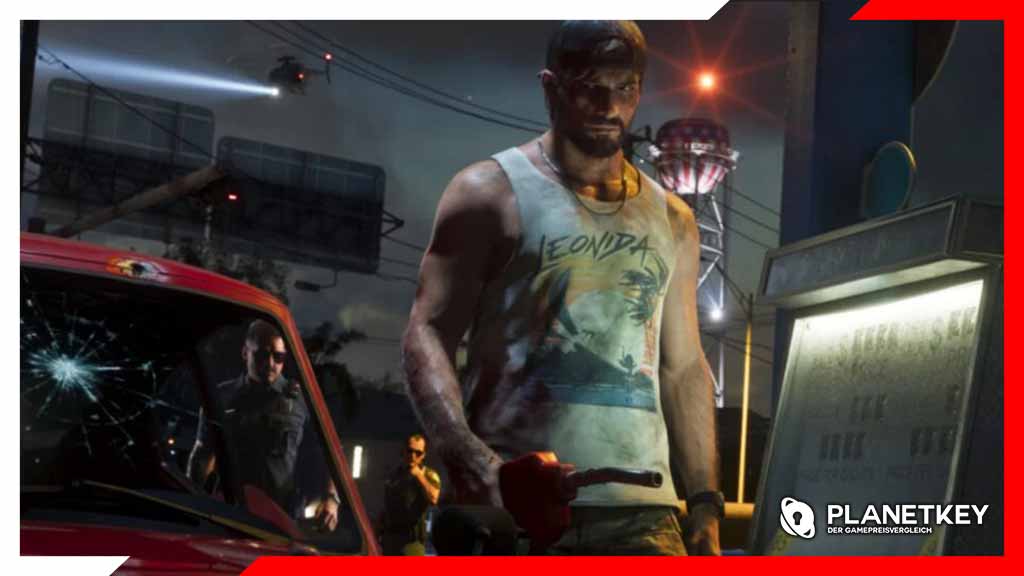
Particularly much fine-tuning in the last runs went into the partner mechanic between the two protagonists Jason Duval and Lucia Caminos. Above all, free exploration of the game world (Free-Roam) proved an enormous technical challenge, because essentially a classic Grand Theft Auto had to be made playable with a full-fledged, intelligent AI companion.
To ensure the illusion of a well-rehearsed duo isn't broken by wooden glitches, the team polished countless everyday situations and sudden changes of direction:
-
Leisure and Shopping: When both enter a store together, they can deliberately buy things for each other; at nightclubs, Jason and Lucia can dance together.
-
Spontaneous Escalation: If the player suddenly pulls a weapon on a pedestrian or hijacks a car on the street, the partner currently controlled by AI must react immediately and plausibly.
-
Reaction Without "Jank": If the player abruptly leaves a store or suddenly jumps out of a vehicle, the companion AI must not be left disoriented or get stuck on obstacles.
When Errors Become Story: Stealth Attacks and Wanted Profiles
How closely these AI systems are interwoven with the actual dramaturgy was illustrated by Nelson with the example of raids on gang hideouts. If one of the two characters approaches a guard to silently take them out, the partner automatically tries to follow suit. The same applies as soon as one of them draws a firearm and opens fire.
Because of this high complexity, small real-time errors can occur – which, according to Nelson, is actually intended because even an unexpected pathfinding glitch can trigger a real moral dilemma:
"In that moment, you have to make a decision – not just as a player, but as a partner: Do I leave the other behind now? Or do I start shooting at that policeman and possibly mess up my criminal profiles? You're constantly juggling all these factors."
Besides the partner AI, the developers used the last months before launch especially for fine-tuning the game economy, the internal relationship metrics between Jason and Lucia, as well as the so-called Criminal Profiles – those reputation systems that control how police and the population react to the duo. A process that by no means ends with the sales release: As with previous Rockstar productions, the economy system, AI behavior, and wanted mechanics are likely to be further refined through a series of patches in the first year after launch.







Comments
No comments yet. Be the first!
Write a comment
You must be logged in to write a comment.