
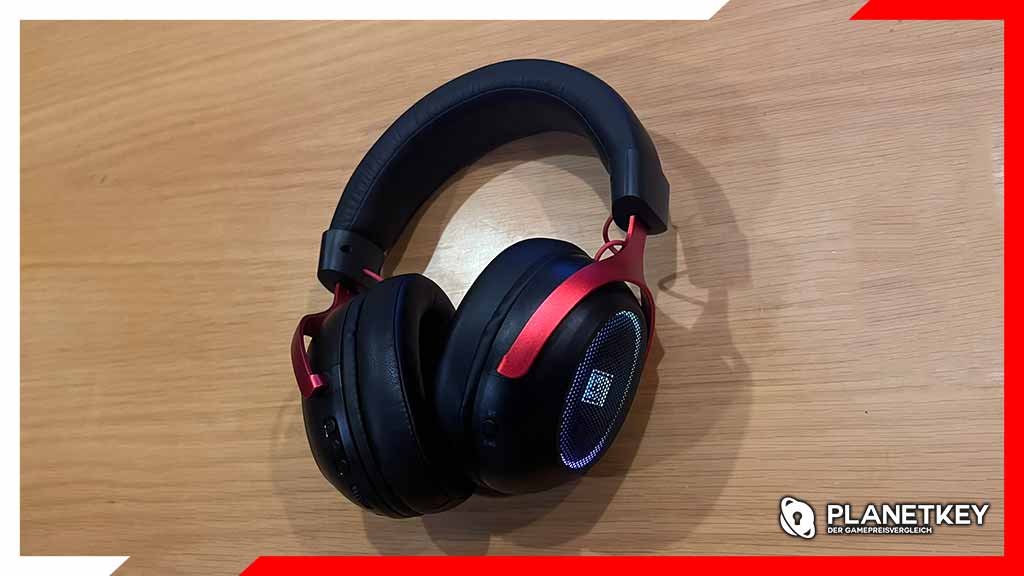
Epomaker is mainly known to the mechanical keyboard community for highly customizable keyboards. With the Epomaker GX1 the accessory specialist now ventures into the headset market. The package of wireless tri-mode connectivity, surprisingly strong sound performance, and fair pricing (approx. 50 to 60 euros) sounds extremely attractive on paper. However, practical testing reveals a mixed picture in terms of ergonomics and design.
Sound Quality: Surprisingly Strong and Crisp
If the Epomaker GX1 can absolutely convince in one category, it is sound: The sound quality is really very good for this price range.
The built-in 50mm drivers deliver an extremely powerful, clear, and dynamic sound image. The bass has a solid punch without overpowering the mids, and details like footsteps, reload sounds in shooters, or instruments during music playback can be precisely located. Those who make minimal adjustments in the software equalizer receive an acoustic result that does not have to hide behind significantly more expensive gaming headsets from well-known brands.
Sound Feel: An Open-Back That Behaves Like a Closed-Back
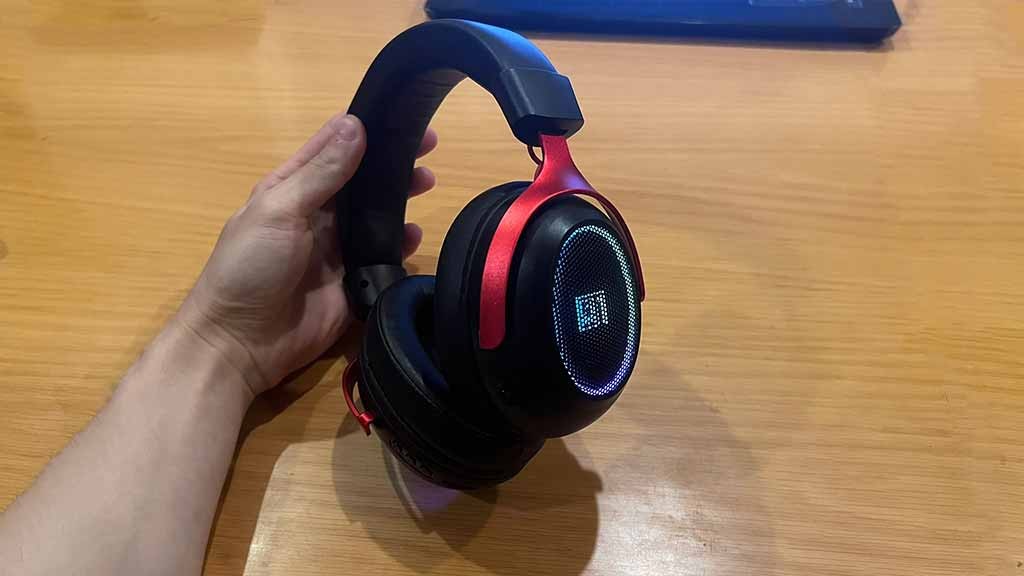
Although the GX1 is marketed as an open-back headset due to the grid-like look of the ear cups, the actual wearing and sound experience noticeably differs from typical open headphones.
In practice, the headset surprisingly behaves very much like a classic closed-back model. The usual, extremely wide, airy, and spatial feeling of a true open-back does not really develop. Instead, the sound image feels more direct and compact. This gives the sound noticeable pressure, but the open design therefore appears more like appearance than reality. Ambient noises are also significantly more shielded than one would expect from a true open-back.
Ergonomics & Wearing Comfort: Comfortable Padding but Painful Pressure on the Ear
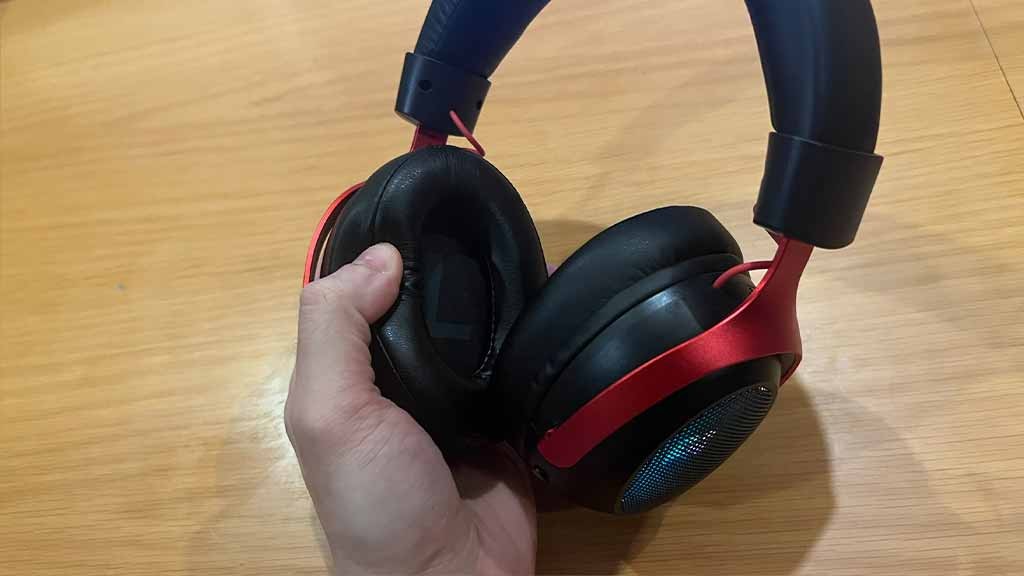
Upon first unpacking, the GX1 scores with its materials: The padding is really well made, soft, and extremely comfortable. The fabric cover feels pleasant and prevents unnecessary sweating.
In the long-term test, the headset reveals its biggest weakness in fit: The shape of the ear cups noticeably presses on the edges of the ears. Although I would not claim to have particularly large ears, the inner edge of the cups rests awkwardly on the edges of the ear shell. While the first 20 to 30 minutes remain comfortable, this pointed pressure becomes really uncomfortable over time and even painful after longer gaming sessions. The ear cups simply lack a bit more depth and space inside.
Connectivity, Microphone & Battery Life
The headset is versatile in terms of connections:
-
2.4 GHz USB-C Dongle: Provides a fast, delay-free connection on PC and PlayStation.
-
Bluetooth & Cable: Bluetooth is sufficient for easy use with smartphones, while cable operation serves as an emergency option (for Xbox players, cable is the only option).
The detachable goose-neck microphone with environmental noise cancellation (ENC) does a solid job. The user's voice comes across clearly and understandably on Discord or Teamspeak, while quiet keyboard clatter is reliably filtered out.
A real highlight is the battery: Without the RGB lighting on the outer sides, the headset lasts extremely long (up to 70 hours according to the manufacturer) – in daily use, you only rarely have to plug it in.
Practical Facts at a Glance
-
Sound Quality: The sound is consistently very good – powerful, detailed, and precise in localization.
-
Sound Behavior: Marketed as open-back, but in everyday use it feels and sounds more like an isolating closed-back headset.
-
Wearing Comfort: Very good, comfortable padding, but the shape of the ear cups causes unpleasant pressure on the ear edges over time (even with normal ear sizes).
-
Connection & Latency: Tri-mode (2.4 GHz dongle, Bluetooth, cable); fast connection without noticeable latency in wireless operation.
-
Battery Life: Extremely enduring (up to 70 hours without RGB).
The Epomaker GX1 delivers really strong sound performance and offers excellent sound, great padding, and long battery life for around 50 to 60 euros. However, those with sensitive ears should consider that the housing shape exerts pressure on the ear edges over time.




Comments
Noch keine Kommentare. Sei der Erste!
Write a comment
You must be logged in to write a comment.