
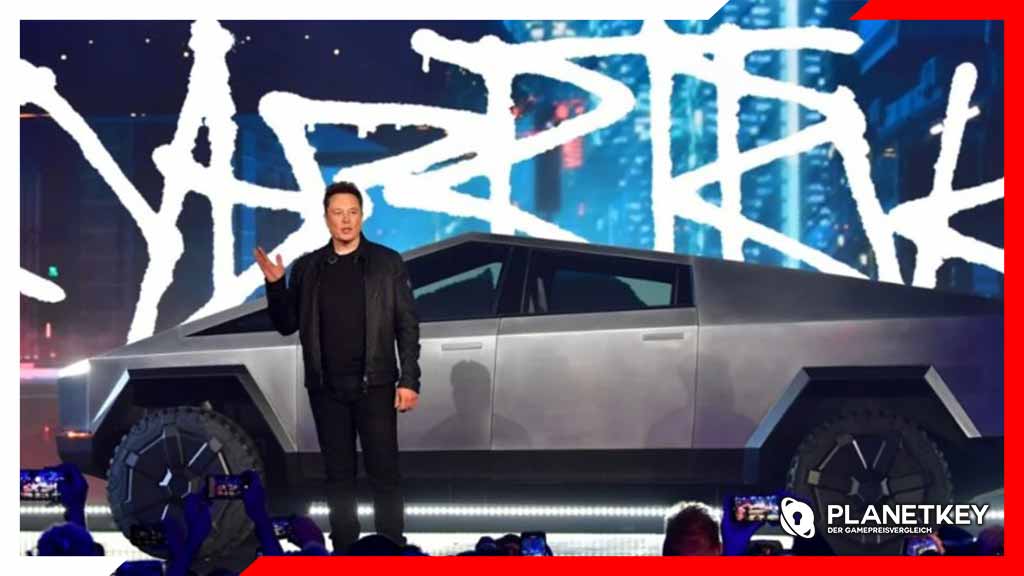
Perhaps the most controversial, polarizing, and widely mocked vehicle in recent automotive and pop culture history has reached the end of its lifecycle. Tesla CEO Elon Musk announced on his platform X that production of the Cybertruck at the Texas factory will gradually wind down until mid-2027 and then cease entirely. The angular electric vehicle, once heralded as a futuristic armored vehicle for the masses, now joins a list of spectacular failures after just a few years on the market.
False start as predicted: From shattered windows to internet meme
The very first unveiling of the Cybertruck in 2019 was a harbinger of mishaps: When Musk tried to demonstrate the supposed indestructibility of the 'Armor Glass' onstage, a lead designer threw a metal ball at the window—which immediately shattered in front of the global press.
Despite this disaster, Tesla stuck to the angular low-poly design. When the first vehicles were finally delivered at the end of 2023 after years of delay, the stainless steel pickup became less a status symbol than the ultimate object of ridicule on social media. Snapshots of abandoned, rusting, or lightly stuck Cybertrucks created their own internet genre, accompanied by derision and astonishment over the partly catastrophic build quality.
Bug-ridden in reality and in 'Fortnite'
The vehicle's absurdity spilled over into the gaming world: As part of large-scale advertising deals, the Cybertruck found its way into the worlds of Rockstar and Epic Games—especially in Fortnite. Yet, fittingly to the real-life original, the digital version suffered from glitches and faulty physics, which led to plenty of gallows humor among players.
Behind the mocking meme status lurked a grim safety record:
-
Recall on the assembly line: Tesla had to recall the model multiple times on a large scale—for reasons including falling body parts on the highway and stuck gas pedals.
-
Fatal accidents and lawsuits: Particularly serious are ongoing court cases filed by relatives of deceased occupants. According to the allegations, defective electronic door locks during crashes caused passengers to be trapped inside burning wrecks, unable to manually open the doors.
Shift to the 'Cybercab'—and political headwinds
Officially, Musk cites the need to free up manufacturing capacity at the Texas Gigafactory for the autonomous robotaxi Cybercab as the reason to end pickup production. Industry analysts, however, paint a more sober picture: Demand for the expensive stainless steel behemoth, which Musk once aimed to sell 250,000 units per year, collapsed sharply after the initial hype.
Furthermore, the tech billionaire faces pressure on many other fronts. Following his multi-million-dollar, highly controversial interventions in U.S. politics, the tide in Washington appears to be turning. The failed Cybertruck experiment is likely just one of many pressing problems on Musk's priority list—for the world's roads, however, the planned production stop means chiefly this: Probably the strangest rolling design accident of the decade is soon to become an endangered species again.






Comments
No comments yet. Be the first!
Write a comment
You must be logged in to write a comment.