

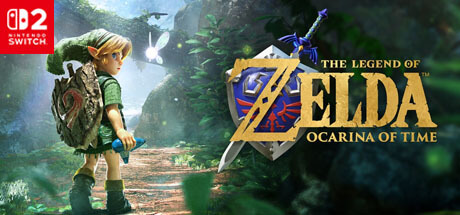
With the release of the completely reimagined masterpiece The Legend of Zelda: Ocarina of Time for the Nintendo Switch 2, many veterans of the Nintendo 64 original face the same anxious question: How much of the original, sometimes wonderfully awkward charm survives the leap into the modern era? While Nintendo has smoothed many edges of the classic, added comfort features, and systematically removed nearly 30-year-old glitches and exploits, one delightfully silly, player-driven detail was allowed to survive: the complete acoustic failure of the Iron Boots in dramatic cutscenes.
Dramatic moments amid a dull metal clatter
In the 1998 original, the Iron Boots (Iron Boots) were among the most important but also most cumbersome pieces of equipment. Combined with the Zora Armor, they allowed Link to sink to the bottom of bodies of water—an essential mechanic for the infamous Water Temple. However, outside of diving, these ton-heavy boots completely changed Link’s movement behavior: he shuffled forward at a snail’s pace, with each step accompanied by a dull, unmistakable metallic clanking.
Because the game never dictated where the player could put on the boots, a beloved running gag quickly developed: anyone who forced Link into the Iron Boots before important story sections turned even the most emotional and darkest story sequences into pure slapstick comedy. When the Hero of Time is supposed to march somberly to a fateful encounter but instead stomps across the screen with deafening Klong-Klong-Klong , no eye stays dry.
Louder and more powerful than ever on the Nintendo Switch 2
As players are now enthusiastically sharing on social media and Reddit, Nintendo did not eliminate this quirky freedom in the Switch 2 remake with scripted restrictions or automatic shoe removers. On the contrary: thanks to the significantly improved stereo speakers of the Switch 2 and the modernized audio design, the tinny hammering of the boots now echoes even clearer, louder, and more bone-shakingly through the room when Link stumbles through ceremonial temple halls.
The right balance between polish and nostalgia
That Nintendo left this subtle nonsense in the game is a reassuring signal to the community. Remakes often tend to smooth out every irregularity to meet modern quality standards (Quality-of-Life) until no rough edges remain. Although the developers modernized the menu navigation and assigned the boots to convenient hotkeys, the player’s anarchic potential was allowed to remain intact. It proves the developers truly understood what made Ocarina of Time so magical nearly three decades ago: not just the epic legend of the Triforce, but also the freedom to occasionally crash that legend spectacularly with a pair of rusty boots.







Comments
No comments yet. Be the first!
Write a comment
You must be logged in to write a comment.